Karleigh's Korner: Frequently Asked Questions (Part 2 of 2)
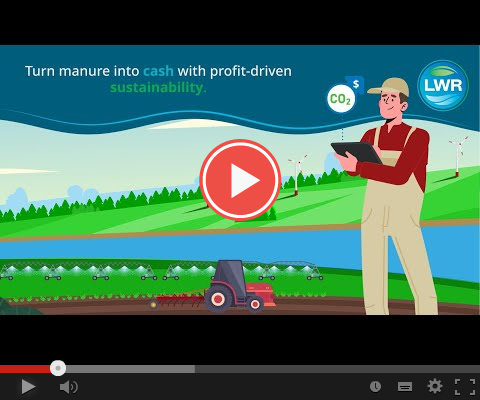
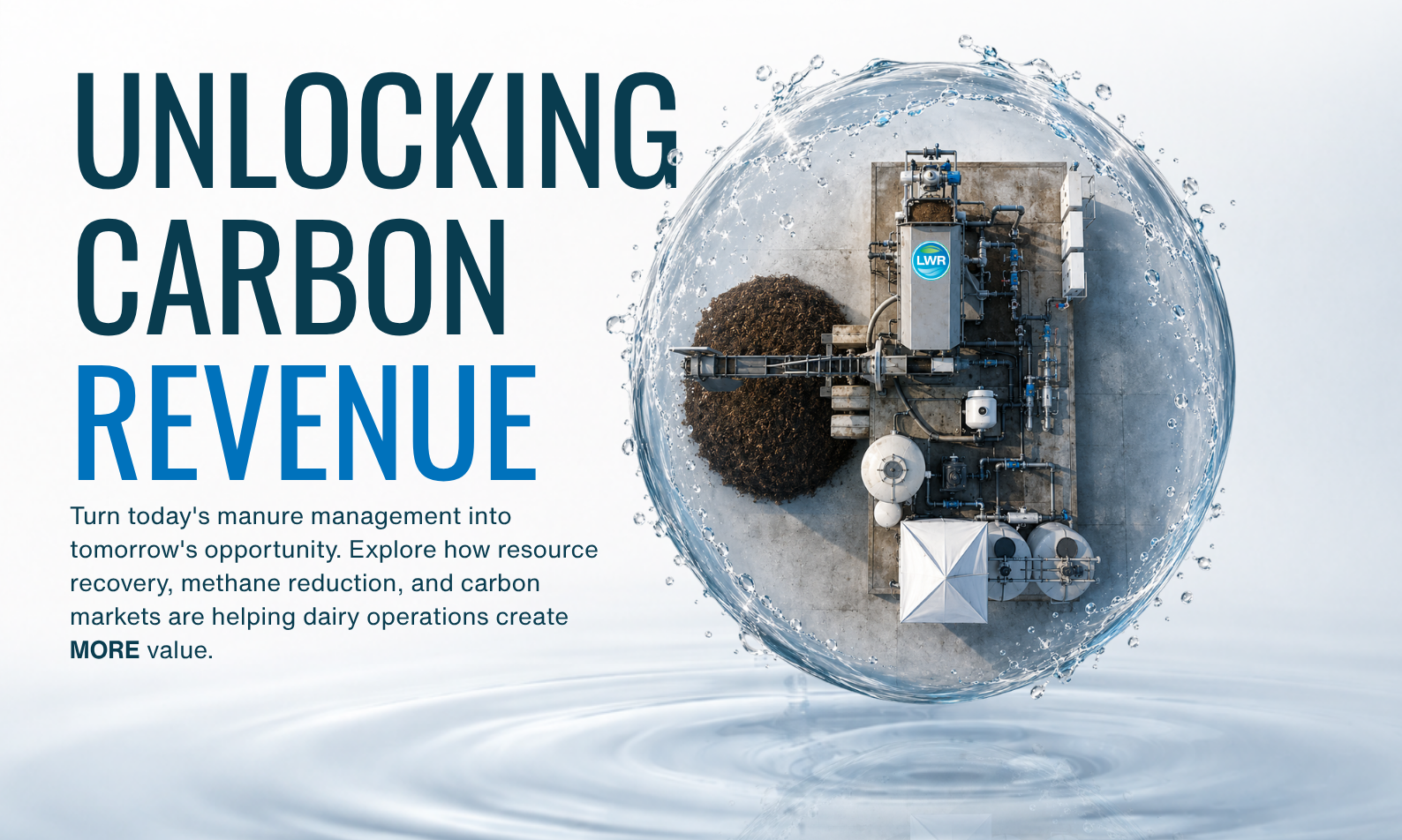
Learn How to Turn Methane into Revenue
Could Manure One Day Fuel Airplanes?
Coffee's On Us During the Calgary Stampede
Nutrient Recovery Takes the Stage at World Biogas Expo
Will We See You at the Manure Expo?
Google AI Is Helping Us Learn From Every Gallon Processed
HAPPY CANADA DAY & HAPPY FOURTH OF JULY!
We're delivering Fast Facts a few days early this month so
you can catch up before the holiday week begins. Whether you're celebrating in
Canada or the U.S., we wish you a safe, relaxing, and enjoyable holiday with
family and friends.
Now, let's get into what's happening across the world of modern manure management.
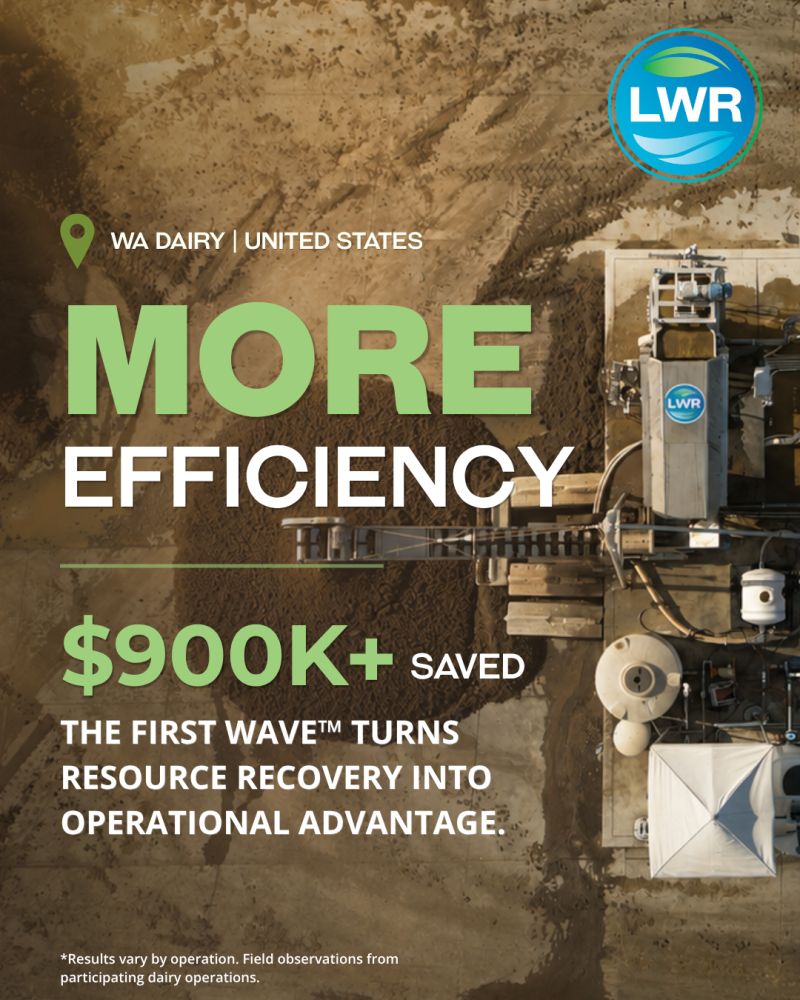
WASHINGTON STATE DAIRY SEES +$900,000 IN OPERATIONAL IMPROVEMENTS
Resource recovery isn't just about sustainability. It's
about improving the bottom line. One Washington State dairy has achieved more
than $900,000 in operational efficiency improvements by integrating
LWR's First Wave™ nutrient recovery technology into its manure management
program.
By recovering valuable nutrients, improving manure
management, and reducing operating costs, producers are discovering that manure
can become a competitive advantage, not just an operational expense.
Every operation is different, but one thing is becoming
increasingly clear: smarter manure management can create measurable financial
returns.
Investing in manure management and nutrient recovery may
become more affordable for U.S. producers.
The USDA has announced up to $310 million in funding through
the Regional Conservation Partnership Program (RCPP) to support conservation
projects that improve farm operations while protecting natural resources. The program includes funding for projects focused on soil
health, water quality, precision agriculture, and other conservation
initiatives. Project proposals are being accepted through August 24, 2026.
If you're considering nutrient recovery or manure management
improvements, this funding may help reduce the cost of implementation. Reach
out to the LWR team to learn whether your project could align with current
funding opportunities.
Last month we covered some of the questions I hear most
often from producers. Here are a few more!
How does the treatment process work?
The PLANT system uses a series of mechanical and proprietary
physical-chemical treatment processes to separate solids, recover nutrients,
and recycle water. The result is multiple value-added streams that are easier
to manage and put to work on your operation.
Is the system easy to operate?
Absolutely. The system is designed for automated, 24-hour
operation with remote monitoring capabilities. Whether you're onsite or away
from the farm, you can monitor performance using a smartphone, tablet, or
computer.
Does the system reduce farm odour?
Yes. By separating solids and treating manure in real time,
the system significantly reduces odor compared to traditional storage methods.
That means a better working environment and improved relationships with
neighbors and surrounding communities.
What kind of support does LWR provide after installation?
Our relationship doesn't end once the system is
commissioned. Every installation is backed by our Manurewards support program,
including operator training, technical support, preventative maintenance,
remote monitoring, and direct access to our Innovation Center. Our goal
is to keep your system performing at its best for years to come.
Have another question? I'd love to hear from you. Reach out
anytime and let's chat about your operation.
More livestock producers are discovering that manure can
generate more than nutrients. It can also generate carbon revenue. Join LWR's Karleigh Lewis and our partners at 3Degrees on July
15 for a practical discussion about methane avoidance carbon projects and
what they could mean for your operation.
We'll cover:
How verified methane avoidance projects work
How carbon credits are generated
The role technology and data play in verification
What participation looks like for producers
Flexible options for getting started
Whether you're actively exploring carbon markets or simply
curious about the opportunity, you'll leave with a better understanding of how
manure management can become another source of farm revenue.
Researchers continue to find new ways to create value from
agricultural methane. A recent California pilot project successfully converted
biogas from a dairy digester into sustainable aviation fuel (SAF), opening the
door to another potential market for methane captured on livestock operations.
While renewable natural gas remains today's primary pathway,
innovations like this demonstrate just how quickly the bioeconomy is evolving.
As new markets emerge, the value of capturing and measuring methane continues
to grow.
It's another reminder that manure is increasingly being
viewed as a resource, not a waste product.
Heading to Calgary for Stampede? While you're in town, stop
by the LWR Innovation Center. It's a chance to see our nutrient recovery
technology in action, meet the team, and learn how producers are recovering
water, nutrients, and new revenue streams from manure. Coffee's on us!
As anaerobic digestion continues to expand around the world,
operators are looking beyond renewable energy and asking a new question: How can we recover even more value from digestate?
That's exactly why nutrient recovery is becoming one of the
hottest conversations in biogas.
Recovering nutrients can reduce handling costs, improve
fertilizer management, create marketable nutrient products, and recycle
valuable water, helping operators maximize the value of every tonne processed.
If you're attending the World Biogas Expo in
Birmingham, England this July, stop by the Genesis Agri stand C52 to learn how LWR
technology is helping digesters unlock more value from every cubic metre.
The countdown is on for the North American Manure Expo,
July 29-30 in Wayne, Nebraska. We'll be there talking nutrient recovery, water recycling,
methane avoidance, carbon opportunities, and all the ways producers are getting
more value from manure.
It's also a great opportunity to meet the newest member of our business development team, Tyler Bentley. Tyler brings years of experience working with livestock producers and will be on hand throughout the show to answer your questions.
If you're attending, reach out so we can connect at the show. We'd love to
learn more about your operation and show you what's new at LWR.
Planning to attend? Reach out and book some time with Tyler while you're there.
GOOGLE AI IS HELPING US LEARN FROM EVERY GALLON PROCESSED
Every day, LWR systems generate thousands of new
measurements, from nutrient concentrations and water recovery to solids
capture, energy use, and overall system performance. Together, those
measurements now represent over 5 million operational data points, and the
database keeps growing every day.
Working alongside Google AI, we're using that data to
identify patterns, improve system performance, and better understand how manure
behaves under different conditions.
Every new installation helps make every future installation
smarter.
That's good news for producers because better data leads to
better decisions.
To ensure our updates continue to land right where they belong - in
your inbox - be sure to give us a virtual high-five by marking this
email as safe or adding us as a trusted contact!




.png)